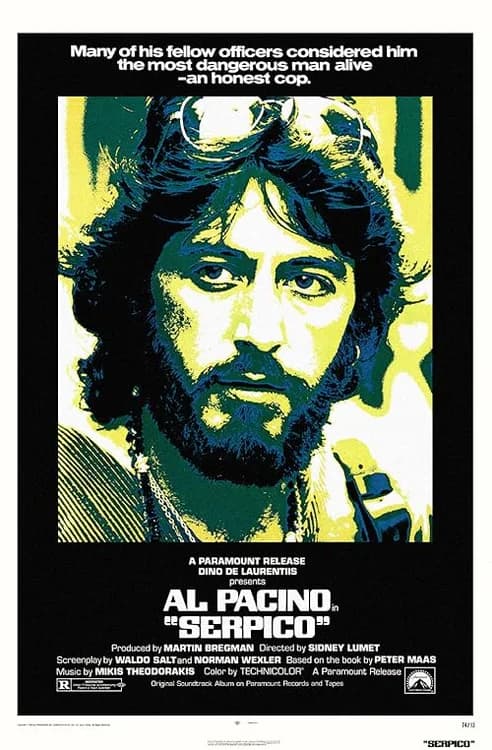
About Serpico
Directed by Sidney Lumet, 'Serpico' (1973) is a powerful biographical crime drama based on the true story of Frank Serpico, an idealistic New York City police officer who risked everything to expose systemic corruption within the force. The film follows Serpico's journey from a fresh-faced recruit to a disillusioned whistleblower, as he encounters bribery, payoffs, and a pervasive 'blue wall of silence' that threatens to crush his integrity. Al Pacino delivers a career-defining performance, capturing Serpico's passionate idealism, growing paranoia, and ultimate isolation with raw intensity. His portrayal earned an Academy Award nomination and remains one of his most compelling roles.
Lumet's direction is masterful, creating a gritty, authentic atmosphere that immerses viewers in the tense, morally ambiguous world of 1970s New York policing. The film's documentary-like style enhances its realism, making Serpico's struggle feel immediate and urgent. Supporting performances, including John Randolph and Tony Roberts, add depth to the narrative, highlighting the institutional pressures faced by those who dare to challenge the status quo.
Viewers should watch 'Serpico' not only for its historical significance as a landmark exposé of police corruption but also for its timeless themes of integrity, courage, and the personal cost of standing up for what is right. The film's suspenseful pacing and moral complexity keep it engaging from start to finish, offering a thought-provoking look at institutional failure and individual resilience. Whether you're a fan of classic cinema, true stories, or gripping dramas, 'Serpico' remains an essential watch that continues to resonate in today's discussions about accountability and justice.
Lumet's direction is masterful, creating a gritty, authentic atmosphere that immerses viewers in the tense, morally ambiguous world of 1970s New York policing. The film's documentary-like style enhances its realism, making Serpico's struggle feel immediate and urgent. Supporting performances, including John Randolph and Tony Roberts, add depth to the narrative, highlighting the institutional pressures faced by those who dare to challenge the status quo.
Viewers should watch 'Serpico' not only for its historical significance as a landmark exposé of police corruption but also for its timeless themes of integrity, courage, and the personal cost of standing up for what is right. The film's suspenseful pacing and moral complexity keep it engaging from start to finish, offering a thought-provoking look at institutional failure and individual resilience. Whether you're a fan of classic cinema, true stories, or gripping dramas, 'Serpico' remains an essential watch that continues to resonate in today's discussions about accountability and justice.