About The Passion of Joan of Arc
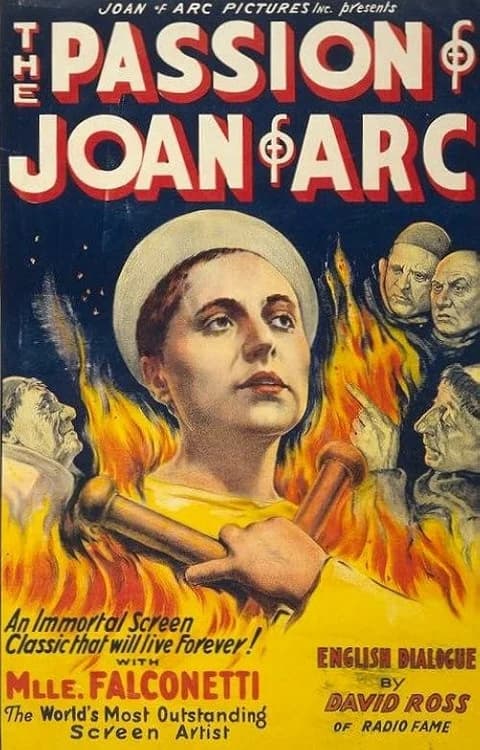
Carl Theodor Dreyer's 1928 silent film 'The Passion of Joan of Arc' is a monumental achievement in cinematic history, focusing on the final hours of the French martyr. The film meticulously depicts her trial for heresy, where ecclesiastical judges relentlessly interrogate her, attempting to break her faith and force a recantation of her divine visions. It is less a sweeping historical epic and more an intense, claustrophobic character study of faith under brutal psychological pressure. The film's power is almost entirely derived from the legendary, once-in-a-lifetime performance by Renée Jeanne Falconetti as Joan. Her raw, unflinching portrayal, achieved largely through extreme close-ups, conveys a spectrum of anguish, defiance, and spiritual transcendence without the need for dialogue. Dreyer's revolutionary direction, with its stark sets, disorienting angles, and focus on expressive faces, creates a visceral, dreamlike intensity that remains profoundly moving. Viewers should watch this film not just as a historical drama, but as a timeless exploration of conviction versus institutional power. It is a masterclass in visual storytelling and emotional performance, proving that silent cinema can communicate depths of human experience that words often cannot. For anyone interested in the art of film, this is an essential and unforgettable experience.