About Creep
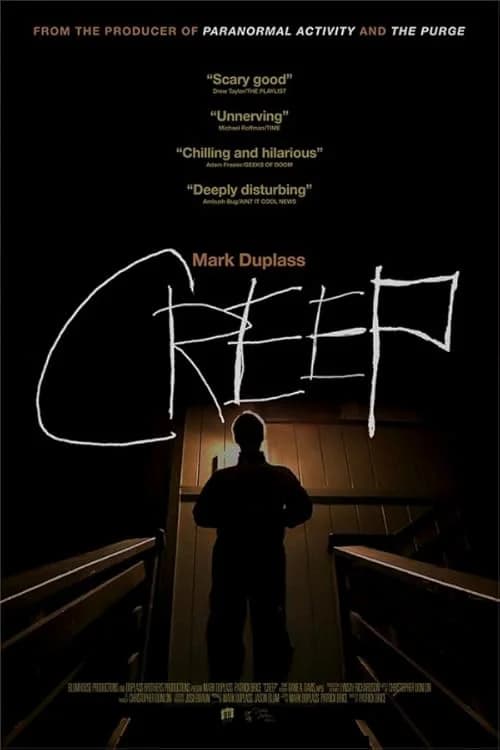
Creep (2014) is a masterfully unsettling found-footage horror film that explores the terrifying consequences of misplaced trust. Directed by Patrick Brice, who also stars alongside Mark Duplass, the movie follows Aaron, a videographer who responds to a Craigslist ad for a one-day job in a remote mountain town. His client, Josef, claims to be terminally ill and wants to create a video diary for his unborn son. What begins as a straightforward assignment quickly descends into psychological terror as Josef's behavior grows increasingly bizarre and menacing.
The film's strength lies in its minimalist approach and Duplass's brilliantly unpredictable performance as Josef. His character oscillates between charming vulnerability and disturbing unpredictability, creating genuine tension throughout the 77-minute runtime. Brice's direction effectively uses the found-footage format to create intimacy and immediacy, making viewers feel like unwilling participants in Aaron's nightmare.
Creep succeeds as both a character study and a horror experience because it understands that true fear often comes from psychological manipulation rather than overt violence. The remote setting amplifies the isolation, while the improvised dialogue lends authenticity to the increasingly uncomfortable interactions. For horror enthusiasts seeking something beyond jump scares, Creep offers a slow-burn thriller that lingers in the mind, exploring themes of loneliness, deception, and the dark side of human connection. The film's cult following and subsequent franchise demonstrate its effective blend of psychological horror and character-driven storytelling.
The film's strength lies in its minimalist approach and Duplass's brilliantly unpredictable performance as Josef. His character oscillates between charming vulnerability and disturbing unpredictability, creating genuine tension throughout the 77-minute runtime. Brice's direction effectively uses the found-footage format to create intimacy and immediacy, making viewers feel like unwilling participants in Aaron's nightmare.
Creep succeeds as both a character study and a horror experience because it understands that true fear often comes from psychological manipulation rather than overt violence. The remote setting amplifies the isolation, while the improvised dialogue lends authenticity to the increasingly uncomfortable interactions. For horror enthusiasts seeking something beyond jump scares, Creep offers a slow-burn thriller that lingers in the mind, exploring themes of loneliness, deception, and the dark side of human connection. The film's cult following and subsequent franchise demonstrate its effective blend of psychological horror and character-driven storytelling.